
Key points:
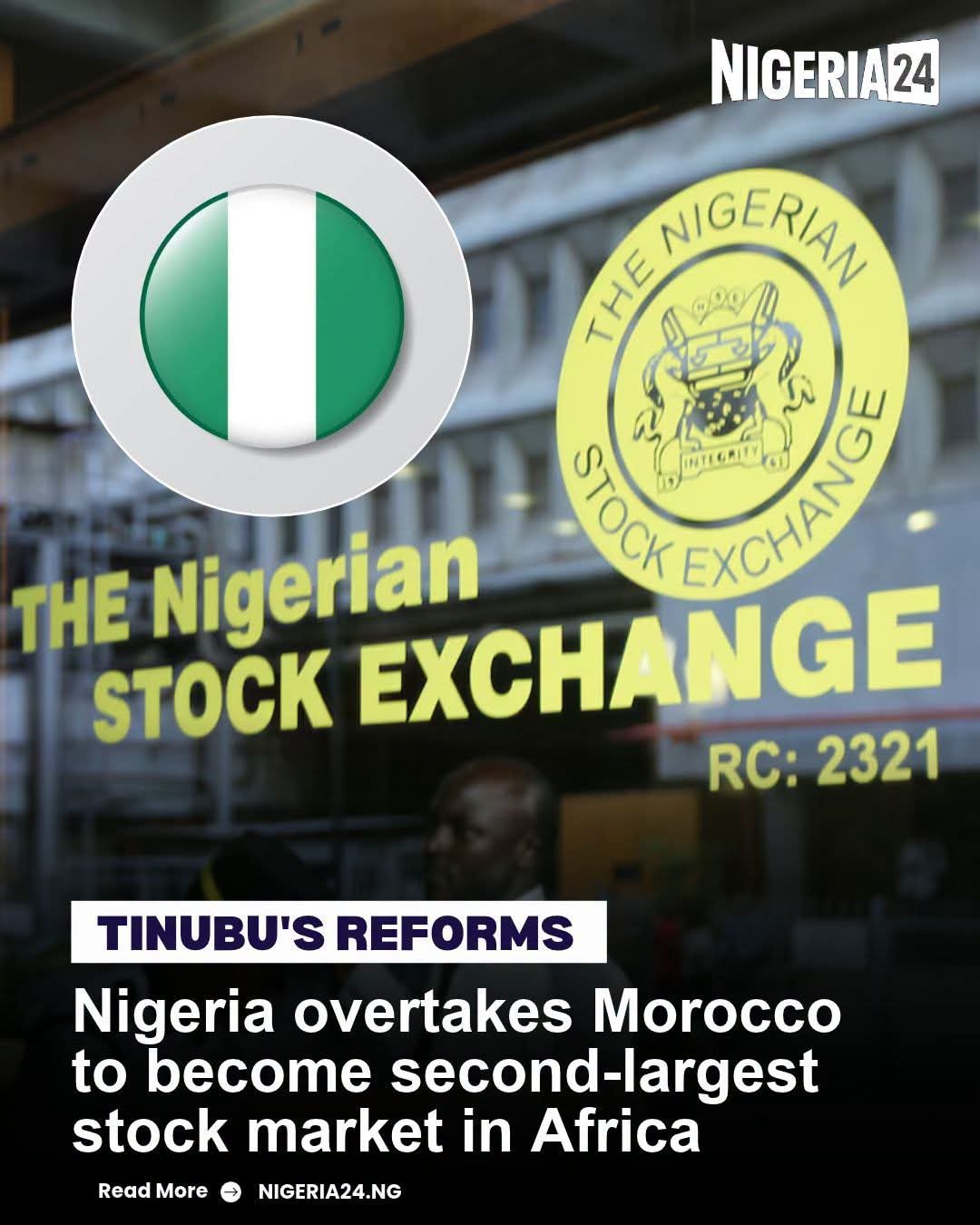
- Nigeria’s stock exchange is now Africa’s second-largest, overtaking Morocco’s Casablanca exchange.
- The Nigerian Exchange is worth about $114 billion, behind only South Africa’s roughly $1.46 trillion.
- The All-Share Index is up nearly 57% this year, driven by the banks, recapitalisation and a steadier naira.
- The milestone was recorded back in May — and the market has held the position into November.
The Nigerian Exchange has passed Morocco. Here is what the numbers really mean.
What happened
Nigeria has reclaimed its place as Africa’s second-largest stock market, overtaking Morocco’s Casablanca Stock Exchange after a long rally. The Nigerian Exchange (NGX) was valued at $117 billion on May 15, 2026, and at the close of trading on Thursday, November 26, its equity market capitalisation stood at about ₦158.49 trillion — roughly $114.19 billion — with the benchmark All-Share Index at 244,089.47 points, a gain of 56.86% so far this year.
South Africa’s Johannesburg Stock Exchange remains far ahead, at about $1.46 trillion. Morocco sits third at about $104.53 billion, followed by Botswana at $78.21 billion and Egypt at $73.81 billion.
The rise is credited to the Tinubu administration’s reforms — the fuel subsidy removal and the unification of the exchange rate — plus the banking sector recapitalisation and a relatively steadier naira, which have drawn investors back into Nigerian shares.
What it means — and what it does not
This is a real milestone, and it says something genuine about confidence in Nigerian companies: banks, telecoms, industrial goods, consumer products and energy firms are all trading higher, and the market has now passed ₦100 trillion in value.
But it is worth keeping it in proportion. A stock market’s size is not the size of the economy, and it is not the wealth of ordinary people. South Africa’s market is still about twelve times Nigeria’s. Most Nigerians do not own shares, so a rally on the exchange does not put food on a table or lower the price of fuel. What it does do is show that investors — at home and abroad — are willing to put money into Nigerian businesses again, and that matters for jobs and growth if the confidence holds.
The test now is whether the market can keep the position. Market capitalisation moves with share prices and the exchange rate, and Morocco is only about $10 billion behind. For now, though, Nigeria is number two in Africa — and that is worth noting.
Sources: Nigeria24; BusinessDay; Daba Finance.

Leave a Reply